Showing posts with label things that are not what they appear to be. Show all posts

Wednesday, July 10, 2013

Artificial & Natural


Like many amateur smartphone photographers (and before smartphones, iPhoto & point-and-shoot aficionados), I take great pleasure in going to beautiful places and snapping eminently editable photos. Not that many areas in the Jackson Hole region need much of a boost in color saturation or sharpness, but still, the small tweaks here and there or the revelation of HDR make me feel that I've somehow done more than aimed and clicked. I've photographed.

Recently, I've been exploring the Gros Ventre region, which is full of pleasurable place names such as the Red and Lavender Hills, and is also the home of the most charming backcountry cabin I've ever encountered. Set betwixt a ridge and a burbling creek at the end of a scenic little dale, its outside was so perfect that I thought it might still be in use by the occasional Forest Service ranger. However, on closer examination, I found the cabin actually split in two and long-abandoned, even though its front windows still wavered with their original glass. In one side sat a 1940's era stove, and on the other, a built-in shelf and table. As to its owner, an hour of feverish internet research produced nothing, though I did uncover a snooty entry from an evaluator criticizing another Gros Ventre cabin's entry in the National Register of Historic Places. Historian snobbery, alive and well.

Klimt Stone

The Gros Ventre is defined by a massive 1925 landslide that brought an entire side of Sheep Mountain down in a crush of tons of rock and trees. The slide, in turn, dammed the Gros Ventre River to form Lower Slide Lake (the "Gros Ventre Slide" is also a locally-beloved breakfast dish at The Bunnery). Two years later, part of the dam gave way, flooding the nearby town of Kelly almost out of existence. Because of its devastation in the flood, Jackson stepped forward to become of the county seat of Teton County.

Evidence of the slide has not dissipated in the ninety odd years since it happened. Huge boulder fields and drowned trees rising eerily from the lake still attest to this past natural violence. Primarily composed of sedimentary Tensleep Sandstone, the rocks and boulders ejected from the mountainside have sometimes an orangish hue and are speckled with bright splotches of many-colored lichen. In my head, I've begun calling it Klimt Stone because this reminds me of Klimt's metallic, speckled, and variegated paint textures.

Burnt trees also lend themselves well to being re-interpreted and morphed into looming, portentous signifiers. The following was on an unnamed ridge (at least, unknown to me) bordering Granite Creek, which is south of Jackson. Against bluer-than-blue skies, the carbonized skin glitters--a stalk of coal.

And this brings us to cloudscapes--perhaps the easiest to manipulate into technicolor visions, mimicking the layering of paint pigment in the depth of the alabaster, the lemon, the champagne. Dialing up a cloudscape brings baroque and rococo heavenly vistas to mind--those windows into ethereality usually guarded by chubby putti with trumpets and garlands. The cherubim don't work for free in Wyoming, however. I've seen plenty of rare animals, including a wolverine (!), but so far, no swirling celestial babies. I'll keep you posted.


As I continue to walk the woods, thinking of my book, and continue to indulge my side interest in documenting new hikes and spectacles, the vividness of real nature and the artificiality of art and nature-translated-to-image continue to inform one another. Sometimes reading is the most vivid thing of all; sometimes writing feels like the shoddiest paintbrush to communicate what is real. Regardless, the richness of a life lived in art and in landscape imparts a reverence for all that hallows, communicates, and beautifies experience. The one is essential to the other.


(Painting: "Adele Bloch Bauer," Gustav Klimt)


Sunday, March 3, 2013

Gold Leaf Fixations

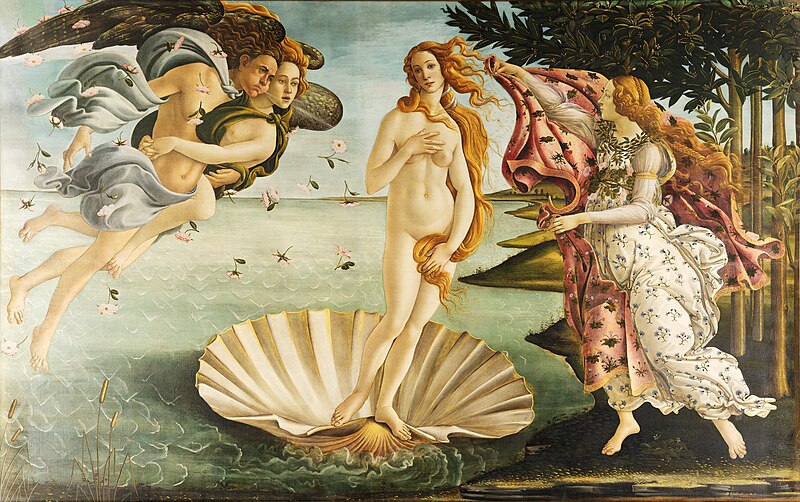
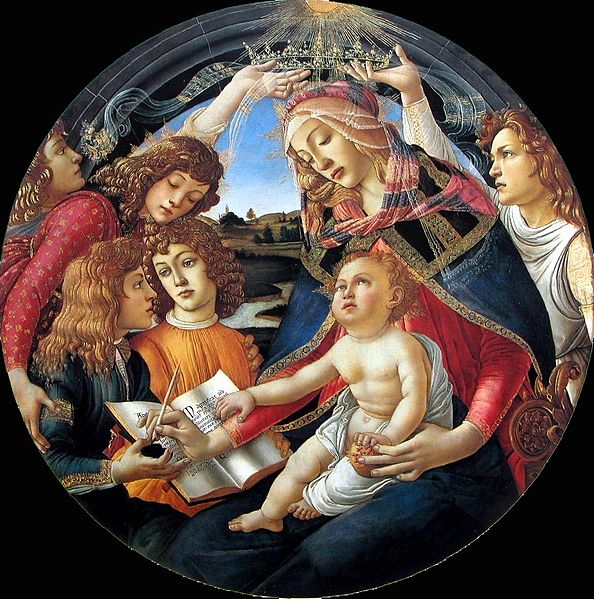
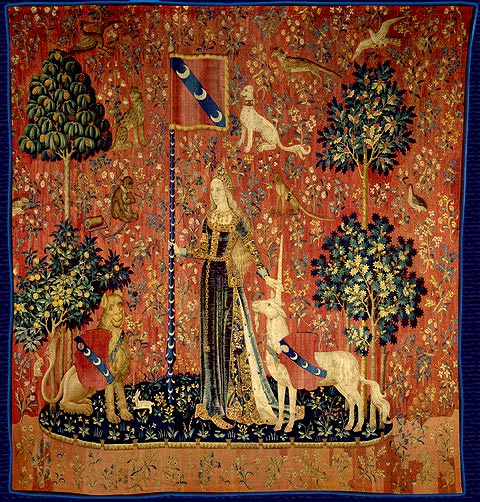
As writers, I think we cycle through various fixations. At different points of my life, I have been obsessed with silent film stars, describing snow, the personal effects of dead people, and medieval tapestries. The list goes on... Currently, I can't stop myself from Googling images and clips of classical ballet dancers. Curiosity feeds my art, even when there will be no pointe shoes in what I'm writing now, and only a little snow. Sick, sniffly, and cranky today, I combed through my own writerly archives and found these quite ancient poems. They brought me right back to my medieval portraiture/gold women fixation of seven years ago. I had just traveled to Europe that summer, and saw the Lady and the Unicorn tapestries in person. I loved those arch, stiff figures, and the symbolically mysterious cornucopia of creatures fixed at awkward angles around the maidens. Back in Seattle, I was cutting apart an old calendar of Botticelli's most famous paintings, and his flaxen-haired maidens painted centuries later called me back right away to the tapestries. Those same blonde maidens with the same faces, cast again and again as Madonnas and Venuses and Muses. I guess I'm still a little in love with them. Anyway, these two ekphrastastic (new word!) poems came directly from two of those uber-famous works. I post them here because, truth be told, I never was a very good poet, and this is really the only venue informal enough to share them. Also, they are oooolllldddd. Don't judge.


After Botticelli’s Birth of Venus

I am the bone white Venus.

I cut my feet when I walked to shore;

I wore clothes that were not my own

but my breasts glinted as pearls
inside my raiments.

The children came to touch my skin.

It wouldn’t be hidden

but glowed.

You are a body of fireflies!
They exclaimed.

My hair looped around the room like the rings of Saturn
and I spit seawater onto my plate.

Excuse her for she has just been born
they said in embarrassment.

I did not know the language yet
and my old tongue fled quickly,

twisted away like gilded fish.

They could not tell I wept
thought my tears a remnant of my salted womb

like the drippings from my limbs,
bursting into bloom on the plank wood floor.

Bless us!
they clamored.

I gurgled words I knew to them, uncomprehending;
the nymphs stole in at the sound and stole cheeses from

the bell dumb crowd

as I rang and rang them with a sound like whale calls.

That wicked baby who has dogged me flew in,
pinched my nipple.

I was dreaming of the shell, tongue-pink
my kelp body, drifting

insensate

just another unfound treasure in the deep

and now diminished, diminishing

trawled out and flaking light
like the most common catch,

Caught.


After Botticelli’s Madonna del Magnificat


Oh mother of the milky skin cry the angels.

There, I shall write in your book, pageboy;
you are prettier than girls.

The corona of my baby cuts into my breast,
my fingers slide over the slick seeds of the pomegranate.

Your wrists are lilies cry the angels.

My baby is fat and transfixed and heavy;
my skin is taut over my forehead.

I can feel the angels rotating my crown like a poker traced ‘ore my scalp
ear to ear.

Your hair golds like wheat cry the angels.
Your face is beautiful and fine like a shell.

I want them to waft this baby, this weight, away;
my robes stripped off

and float aimless like a star
unknown, unheralded, unflaxed with gold,

empty as I was born.

(all images: Wikipedia)

Sunday, December 9, 2012

The Ugly Truth About Writing, and Thank You


I am currently backing up my hard drive.  You mean, you've had a novel on your laptop, 6 years' worth of writing, photographs, music...and your laptop is from 2006 and incredibly slow...and you've never once backed it up?  Nope.  Haven't.  Stop looking at me weird.  Although, the novel has been living in Dropbox since the spring, and I have used one of those online back-up thingamabobs.  I remain a technology neophyte in many ways.

A task such as backing up one's laptop always leads to the most delightful writerly navel-gazing.  In succession, I opened languishing Word documents entitled "Dream Transcripts," "The Savage Dentist," and "Even the sound of cars driving by is hurtful after the end of a relationship."  Raw. Ouch.  Like the true hoarder I am, I suddenly felt pained to even transfer these long-forgotten and yet obviously beloved documents to the external hard drive in order to delete them from the laptop and thus free up much-needed memory.  I suppose, at heart, every hoarder feels a sense of psychological ease in knowing that something will stay and live where it has always lived, instead of the "banishment" of storage, deletion, or (unspeakable!) actually throwing it away.  This exact drama had a preview as I felt pangs thinking of storing even one box of books or papers in my parents' garage, despite the fact that I haven't yet scratched the surface of unpacking them.  I had bought that used copy of W.H. Auden's Selected Poems, and now, in the dead of winter, on CHRISTMAS DAY, a rat was probably going to chew through its center, and then I would have never really read Auden, and his Modernist words would be masticated and forever lost to me.  This line of thinking would occur with each book.

Another thing I save with a hoarders' obsession are the drafts of stories that I wrote in grad school and submitted to workshops.  I save every single copy that was annotated by professors and fellow students: many covered with loopy script, and even personal, page-long comments sheets addressed as letters.  Same thing goes for the comments my writers' group of 3 years in Seattle was kind enough to bestow upon me.  The last time I really looked at some of these comments--some dating from the very first quarter of grad school--it struck me that in that period of my life, I received the most validation and well-wishing and good old-fashioned understanding of my writing than at any other time before or since.  I am aware of the flurry of critiques that surround MFA programs, and I have found myself on both sides of the debate.  Still, it is a special time: when you are a serious person in a serious city, writing late into the night, printing out multiple copies, receiving engaged attention, even when it is salted liberally with criticism.  For me, it was a time that made sense.  Not in every way.  But in one important way.  Each day, I do the thing I am best at doing.  Each day, others witness it.  Others care.  I cared about them, too.  Some of the writers I worked with at the University of Washington became my dearest friends (holla!) and through its hive of networking, I connected with the three fabulously talented women who traded work informally with me for several years.  Some of my colleagues wrote indelible stories and poems that I still think about, even if it has been years since I've seen them.

When I speak of the "ugly truth," what I mean is that, as any writer knows, the image of Hemingway and Fitzgerald drinking gin fizzes at a cafe table in Paris while also casually writing masterpieces on their napkins and/or moleskin journals is simply not a real thing that occurs.  Take me, for example--maybe not writing a masterpiece, but plugging away nevertheless.  Mostly, I am unglamorously dressed.  (The nice thing about living in a cold place is that you can wear a hat all the time).  I write on a Saturday night.  My dog seems confused by what I am doing.  I dream about my characters more than real people I know.  I set aside a day of unfettered writing and end up reading a book about the history of marriage until noon.  I queue up the novel and then hear the opening score to Downtown Abbey downstairs and spring from my bed in a second.  Truly Pavlovian.  I write.  And also, I don't write.  Or I write content for jobs, which are not novel-related.  The secret shame about working on a big project is that you've said "Goodbye!  I am off to make my fortune!" and you have been waved off and embraced and supported. And every day is a litmus test as to your commitment to the goal.  Some are banner days, and some are struggles--especially that old, beastly struggle of the will.

So, this is where I get to the "thank you" part.  Sometimes, I barely recognize myself.  Like an adolescent in limbo, I no longer live on my own (aka with the best roommate in the history of the world, ever); I no longer go out much; I no longer dress up (although I wear waaayyyy more hats); my evening calendar is often bare; I watch more television than I have in almost 10 years (unfortunate confession, but the fact that a show called "Duck Dynasty" exists has sadly not escaped my notice); I read about the same amount, but with a sense of guilt that I really ought to be writing my own words; I no longer report to the same office at the same time every day (give or take an hour); I no longer see the majority of the people that have provided my everything-or-close-to-it for the past seven years.  It's hard to know, without enough perspective, if all of these changes are bad or good, although certainly none of them have to be permanent.  I am not unhappy.  Sometimes, I feel happier than ever.  But, still.  Often I am confused and discouraged and demoralized, traded off equally with being ecstatic and purposeful and hopeful. I suppose there is no way to know what this time has meant until it is over, and the novel is done.  And even then, so much is uncertain.

So, thank you, friends from near and far.  And family, too (of course).  Every time you ask me how my novel is going, or we talk novel-shop, you comment on my blog, or you tell me that what I am doing is inspiring to you, it adds one more drop to the bucket of this is a time that makes sense.  Every time we talk in general, whatever it's about, my heart is gladdened and lightened.  The work is made real.  It seems less like the undertaking of an underemployed 29-year-old woman in her pajamas, and more like a valid project, and a dream that is worthwhile to pursue.  Obviously I wouldn't have come to Jackson if I didn't already believe that, but as obstacles rear themselves along the way, it is still heartening to remember.  I am so fortunate to have this time, to have the support to make it happen, and to have all of you.  Thank you.  Even though I am thousands of miles away, I could not do this without you.

P.S.  Miss you.  Love living vicariously through all of your news and adventures!

Tuesday, March 13, 2012

Just Shelved

The Rings of SaturnThe Rings of Saturn by Winfried Georg Sebald

My rating: 5 of 5 stars

The past year has been my year of reading European travelogues--Sir Patrick Leigh Fermor, Rebecca West, Lawrence Durrell, and now W.G. Sebald. Except none of these books are actually travelogues, any more than a novel is simply a story. They are compendiums. They are philosophical treatises. They are everything. Only--the writers have composed them while rambling. Place looms down into the works. Place catalyzes.

The Rings of Saturn is one of the most beautiful of all. Temporally, the author walks through an area that I myself have seen, so my love wells a little from nostalgia. Even without a familiarity with the Anglian countryside, however, there is no doubt this book is a masterpiece. I don't use that word lightly, but if a work of art can make one see the beauty and inscrutability and humor and cruelty and cravenness and mechanization of human beings side by side with the mysterious things they have built and created, and condemn the darkness of our souls, while still wanting to live, while still, in fact, loving that most tenuous of gifts--well, then isn't that work of art doing all that it is possible to do? Along the way, I learned about the last Chinese empress, silkworms, abandoned missile silos, crumbling country estates, Joseph Conrad, Chateaubriand, Rembrandt's painting of a dissection...I learned so much. Each section ended with a note of pleasure, like a cello string being plucked deep inside the sternum. I dreamed all kinds of beautiful dreams when I finished the book. I was changed by it.

View all my reviews

Monday, November 7, 2011

Miscalculation of the Day

A Dvorak Pandora station does not necessarily create a soothing soundscape for writing. Am now tempted to add bayonets, homicidal swans, and men with florid noses to my story-in-progress.

Sunday, October 9, 2011

Just Shelved

My rating: 4 of 5 stars

Great collection entirely comprised of up-and-coming (and firmly established) female writers of fantastical, fabulist, and, well...weird fiction. I loved the presentation and careful curation of this book--clearly exciting things are happening at Tin House. Some of the bigger names (Lydia Davis; Miranda July) were represented by fairly slight (dare I say lazy?) pieces, but there were plenty of other gems and new writers to discover. A few stories tended towards the fey or overly cute--always a risk of this genre--but there was enough unsettling, and indeed, unfeminine, weirdness to go around. I also think the tone of fantastic fiction lends itself well to describe coming-of-age journeys: a freakish time, indeed.

Particular favorites:

Aimee Bender's "Americca"
Judy Budnitz's "Abroad"
Julia Elliott's "The Wilds"
Samantha Hunt's "Beast"
Kelly Link's "Light"
Lydia Millet's "Snow White, Rose Red"
Alissa Nutting's "Hot, Fast, and Sad"
Stacey Richter's "The Doll Awakens"
Karen Russell's "The Seagull Army Descends on Strong Beach" (my favorite)
Gina Zucker's "Big People"

Tuesday, March 22, 2011

Miscalculation of the Day

I just mistook a basket of of rocks for a basket of chocolates. Glad I did not attempt to bite one.

Monday, September 20, 2010

Just Shelved

My rating: 4 of 5 stars

I resisted this book at first. I wondered what Caro Bell (the character with the most page time) had to offer besides being an incongruous challenge for men to fall in love with; falling in love with her seemed to say something about their characters, but did little to illuminate hers. I also bristled at some of the prose. As with many elliptical and lyrical prose writers, Hazzard's overreaching imagery coexisted--sometimes awkwardly-- with searingly beautiful turns of phrase.

I was miffed. I also kept reading. And opened the book on my lunch hour. On the bus. Late at night. Early on a Sunday morning.

I was surprised in the best way, the way I remember being surprised by Anna Karenina long ago, in that characters who had originally seemed outside of the central drama, writ large, were illuminated with the same inquisitive brush as the ostensible central figure of mystery. Love was walked into like sudden, perilous games of cards. All or nothing. The highest of stakes. In the end, I had the most sympathy for those that had originally seemed the least interesting. I saw myself in them. The perilous love endured, this time the way a bus lumbers past every hour or so, and everyone notes it and thinks, "Yup. Still running."

Meanwhile, the England of the setting is modernizing. Women are working in offices. Caro Bell never ages and wears delightful scarves at all times.

And, then--

--one of the best and most finely-executed plot twists I have ever encountered in a work of fiction. To say more would give something away. But wow. Characters are unmasked; all is not as it has seemed.

Four stars: earned with grit and gristle.

Tuesday, December 8, 2009

Miscalculation of the Day

This morning as I waited for the bus on the I-5 on-ramp, I saw a man drive by with what looked to be the whitest, most dazzling grin. "I'm so glad to see happy people this morning!" I thought to myself. Then, when the car got closer, I realized that the white "grin" was actually a mustache, and the man was scowling.

Oh, well. At least it's sunny.

Monday, November 16, 2009

Miscalculation of the Day

This morning I touched a discarded throat lozenge that was sitting on the window ledge of my bus because it looked like a polished stone or pearlescent button. Thence: sticky, contaminated fingers. Yuck. Should have thought that one through.