Showing posts with label gender. Show all posts

Wednesday, September 12, 2012

Self-Education

Excavating some old journals, I found these entries from Past Kirsten:

Wednesday, 6-22-94 (11 years old)

Today at Kidzart Camp we acted out the passageway of death in Greek Mythology.  I got really interested so I went to the library and checked out a book about all the Greek Gods, Goddesses and mortal heroes.  So far my favorites have all been goddesses or women.  Here are some of them: Artemis, Athena, Cassandra, Demeter, Hera (and two more I can't remember).  A lot of the goddesses + women were helpless, but these women were smart and often beat men.

Thursday, 5-11-95 (12 years old)

I have been writing every day for a week today.  Today was pretty regular.  I have also decided not to be so studious.  I am not saying that I'll never do my homework or anything like that.  I'll still try to get A's and good grades on tests but just to be more loose and not feel pressured to do schoolwork all the time.  I desperately want a pair of brown or forest green or white or dark blue corduroys.  I also need a bra that doesn't always show the straps.  Socks too!

Friday, 5-12-95

I can't wait until Monday because we get to go on our band trip.  The day we've been promised for so long is finally coming near.  I am going to bring my discman and have a seat by myself since I'm not much of a talker on road trips.  I have had a pretty good day.  Nicole is spending the night tonight.  In fact my day has been pretty exciting today.  More in other journals.  (Because I actually had six at the time.)

Friday, 12-22-95

Dear Signifa (I had now named the diary),

Only 3 more days till Christmas!  I know I'm being a bit materialist but I think everyone is in a small way.  Today I read a lot of Emily of New Moon.  It's a very sweet and good book.  We went to a friend's house which was sort of fun (being completely honest.)  I stayed up till 12:00 watching a movie about a dysfunctional family and I got a new book from Caroline, The Scarlet Letter.  I can already tell that I'm going to love it!  Each phrase drips with beautiful, rich words and it seems to be an inhuman struggle with pain and suffering which always appeals to me!  Ciao!
***
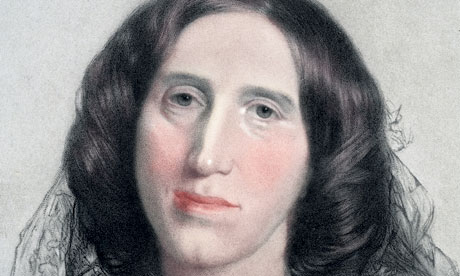
While visiting beautiful Doe Bay Resort on Orcas Island a month ago, I took a George Eliot biography from the leave-a-book, take-a-book shelf.  Now two days into an immersion and reconnection with one of my favorite novelists--especially from my formative years--I have enjoyed the portions I've devoured thus far regarding Eliot's youth.  Painfully gifted, exceedingly self-critical, and yet immensely motivated to win approval (and love), I think her story might ring a few bells of recognition for most of us adults that grew up as bookish, shy, and awkward children.  I know it certainly does for me!

I include most of of these old diary entries of mine simply because they make me laugh, but I was also surprised, on looking through some of my old journals and papers (being a prodigious diarist at the time) at how--alongside the predictably hilarious laments about acne and sixth grade crushes--I was clearly preoccupied with my school success and fledgling intellectual endeavors , holding myself to a rigid standard of excellence.  Of course this makes sense, as at the time I was a plain and oft-teased girl without the charms of bubblyness and prettiness that usually endear little girls to adults and peers.  I was too tall and had little to no interest in sports or other rowdy games.  Any extant picture from that time has been shoved into the deepest, darkest drawer of my old desk, so you'll just have to take my word for it: picture a stork with a pot belly, bowl cut, braces, and huge round glasses.  Banded together with the few friends I had (all of whom were also bookish, and remain close friends to this day), I found that the one thing I could do was schoolwork.  I loved to read (of course), and alongside this, I had an ambitious streak, and found that mastering schoolwork was the sole route available to me for distinguishing myself and winning praise.  Because, oh yes, like anyone, I loved praise.  I was not in it merely for the joy of learning.  It surprises me to find diary entries dating back to the 4th grade in which I recorded staying up until nearly midnight in order to study and complete assignments.  Fourth grade!  Apparently, I have been working on those procrastination and cramming skills for a very long time.

Reading itself, however, was an enduring joy.  I remember clearly the summer I spent obsessed with the Greek myths.  At my insistence, Dad took me to the local library, where I checked out a ponderous cloth-bound volume entitled A Dictionary to All Greek and Roman Mythologies.  I turned page after page of myths, laboriously cross-referencing the goddesses and heroes mentioned with the appendix in the back.  I encountered a lot of "Rapes" in this endeavor.  The Rape of Proserpine.  The Rape of Leta.  Huh, I thought at the time, but in all these pictures it just looks like someone's picking a woman up and carrying her around.  (I hadn't really figured out the illustrations or statuary depictions yet.)  I penned a little skit about being a messenger from the Underworld and wrote many small poems from the point of view of gods and goddesses.  In other words, I was in total adolescent nerd heaven.

I also remember how the early classics I read completely walloped me, especially the Brontes.  I loved Jane Eyre so much, I felt she might be a literary stand-in for myself.  I related especially to her feelings of mousiness, smallness, and inhibition.  At the same time, her radical bravery and demand for egalitarian love inspired me, and gave me hope that despite what I felt to be my unlovable exterior, my inner worth might someday be discovered.  I would surmise that any young person reading such a book at such an age might have similarly powerful feelings of identification with the young narrator.  Indeed, the novel is most enjoyable to read as a young person, in my opinion.  This set off a programme that continued through my early college years of "serious" fiction and poetry reading.  Interested only in what the Canon deemed the Classics, I scanned lists with titles such as "100 Best Books of the 20th Century" and "100 Greatest Novels," starred the books that looked interesting, and then read them one by one as my pleasure reading, or on summer holidays.  For a long time, I turned up my nose at contemporary, and most American literature, preferring instead to plod through a random selection of world literature greats.  Thank goodness, too!

Kathryn Hughes' biography of Eliot does bring to mind colors of my own girlhood and self-education in literature.  Eliot's self-education is a whole other marvel in erudition and intellectual rigor, so mine pales considerably in comparison, as does my intellect, of course.  A George Eliot is only born once or twice a century.  However, reacquainting myself with her august, looming presence over English literature, and over my own influences as a writer, I realize that in my childhood efforts, Eliot was just the sort of person I sought to copy.  More so than any writer, even writers whose works have moved me equally, and on a more adult footing, Eliot, the Brontes, and Austen were my original authorial heroines.  They were the first authors who affirmed for me that even someone obscure, plain (because I remained obsessed with this self-fashioning for many years), and even unpleasant could become "great" and be remembered for years to come.  And, I should mention, reading of the young Eliot, I am reminded of how arrogant and often priggish I could be as a girl--inflating my sense of self-importance in accordance with my belief that only great people could understand a soul such as my own.  That self is certainly the most painful to remember now that I have entered a well-adjusted adulthood and have long been reconciled to my own limits of intellect and influence.  As I said, there can only be one or two Eliots, and luckily, after about the age of 14, I cooled down a bit with my pumped up self-opinion and became a more pleasant, social, and (interestingly) less obsessive person.

Still, I have been interested in revisiting this long-buried childhood self because it was this same stubborn girl that chose writing as her metier at the age of six and insisted through the twenty-three intervening years that this was the thing--the thing I was destined to do.  I suppose, after all this time, that I am still invested in believing that girl.  I have to be.  This year I'm supposed to be doing the thing for real, for keeps.  I am starting to say it, more and more.  "I am a writer."  I have doubted myself many times, especially through my unfocused and pleasure-loving twenties, but here I am, alone, away from most of my friends and the urban center I've called home for six years.  I'm sitting here in my parents' house, sequestered with a book and journal and computer, and I am writing.  Painfully, and sometimes joyfully, I am doing the thing.  Ironic, isn't it, how our younger selves are so foolhardy and yet so full of fierce belief?  If I had given young me the (totally true) spiel about how hard it is to be published these days and how the state of publishing is perilous and how it's so hard to find time to write, she would have looked back at me, blinking behind those gigantic wireframes, and said So?  You just have to do it.  Her blind, arrogant, and foolish belief is, in many ways, exactly what I need.

Sunday, December 18, 2011

Just Shelved

The White AlbumThe White Album by Joan Didion

My rating: 4 of 5 stars

Joan Didion has the same rare and inimitable style as Dame Rebecca West. She coolly observes the scene around her, and when she makes a pronouncement on anything--whether it be Jim Morrison, the Hoover Dam, shopping centers, or her own neuroses--she does so like someone ringing a clear, pure bell. It sounds, and it seems final; it seems bare and essential. I don't know how she manages to do this in such an economy of words, but she does. This collection of micro-essays comes together and does more than simply sketch the end of the sixties in Southern California; it does something more rare, imparts a flavor, a re-animation. One imagines Didion slipping into the background of any scene wearing huge glasses, able to seem both invisible and authoritative. I hope this bell continues to sound.

View all my reviews


My rating: 3 of 5 stars

I read this book very quickly--it has one of those puzzlebox plots, where one awaits a conclusion that ties the intersecting storylines together. I would say it's enjoyable to read, and the prose is very smooth (lots of periodic sentences...don't fear the semi-colon or the dash, Nicole). Somewhere deep down, however, I didn't entirely buy it. The objects and personal failings/obsessions that catalyzed so much repetitive sorrow for the characters didn't seem believable to me. The voices of the characters themselves were engrossing--some more than others--and I believed in the grief of their pasts (except for the lady novelist who writes successfully from her ivory tower but bemoans her ability to connect with others). I don't believe in grief that's entirely organized around an object or destructive fixation, however. By the end of the book, the poor desk of Great House groaned beneath the weight of so much symbolic significance. I would still be interested to read other work by Krauss, however.

Sunday, October 9, 2011

Just Shelved

My rating: 4 of 5 stars

Great collection entirely comprised of up-and-coming (and firmly established) female writers of fantastical, fabulist, and, well...weird fiction. I loved the presentation and careful curation of this book--clearly exciting things are happening at Tin House. Some of the bigger names (Lydia Davis; Miranda July) were represented by fairly slight (dare I say lazy?) pieces, but there were plenty of other gems and new writers to discover. A few stories tended towards the fey or overly cute--always a risk of this genre--but there was enough unsettling, and indeed, unfeminine, weirdness to go around. I also think the tone of fantastic fiction lends itself well to describe coming-of-age journeys: a freakish time, indeed.

Particular favorites:

Aimee Bender's "Americca"
Judy Budnitz's "Abroad"
Julia Elliott's "The Wilds"
Samantha Hunt's "Beast"
Kelly Link's "Light"
Lydia Millet's "Snow White, Rose Red"
Alissa Nutting's "Hot, Fast, and Sad"
Stacey Richter's "The Doll Awakens"
Karen Russell's "The Seagull Army Descends on Strong Beach" (my favorite)
Gina Zucker's "Big People"

Tuesday, October 26, 2010

Strutting, Sorting, and Sisterhood

So, there has been a lapse. Not a lapse in desire, but certainly a lapse in time, in motivation, in words. A lapse here at my poor neglected blog. Now, I am not going to make any grand promises about getting back to the entry-a-week pace I had going when I first began this humble outpost last year, but I do have quite the backlog of things that I have been involved in/thinking about, and so I think it's time to give them a due and catch up on a few projects.
First off, I participated in an event called Versus a few weeks ago. This was a project lovingly produced by The Heroes, a local arts collective in Seattle who have put on an array of cross-genre productions (plays, readings, etc.) in the past year or so. Versus was an interdisciplinary fashion show with the theme of "conflict resolution." To that end, each designer worked within a theme of resolving opposites (carrier pigeon vs. text messaging, paper vs. plastic, etc.). I was lucky enough to strut the runway for two designers: Angel Gehm (Joan Jett vs. Jellyfish) and Paige Sandilands (Dreams vs. Reality). Anyway, it was a pleasure to be part of this hub of artistic excitement and endeavour for the day. I got my hair teased out to ridiculous proportions by a genius stylist, enjoyed my leonine eye makeup, and had a ball socializing with all of my supportive friends who came out to support the show. For those intrigued, here are some photos of the event. Props to The Heroes and the way they've brought the artistic community together in their events thus far.
As for sorting, I've begun a new series of short pieces inspired by the idea of objects, especially objects belonging to strangers or people who have passed away. I'm really happy with them so far. On that note, I've found out more family history facts for those interested (on my mom's side of the family). I tracked a family of Talleys (spelled as Tally) in the 1840 and 1850 census rolls in Pontotoc, Mississippi (a place name so rich in alliteration, it's nigh-Faulknerian). A "Guilford Tally" is listed as the head of the household in both census entries, with a young son named "Major G." The idea of a young boy named "Major" delights me to no end. He seems to me like some sort of young Twain protagonist -- getting into scrapes and outsmarting the adults of the town. The members of the household are listed as being born in South Carolina or Georgia, so I think they might represent the first generation of Tallys in the town. My supposition is that young Major G. could be the father of my great-grandfather, D.G. (Demus Gordon), who was born in 1889, although admittedly, that would make young Major pretty old at the time of his birth, especially for that time period. Unfortunately, I haven't been able to access later censuses online to verify this (although a "D.G. Talley" of Pontotoc, MS is listed as buying a hog in 1906 -- certainly my relative. The internet never ceases to amaze). I could be wrong on all of this, but nevertheless, I'm having a grand old time being a sleuth on this trail of of yellowed papers.
On the other side of the family (Underwoods), I did a little searching about my great-great-grandfather, W.H. Underwood. From some of the correspondence and photos I now have in my possession, I know that he was a Methodist preacher, and that he and his wife worked as the heads of a Methodist home for the elderly in Beatrice, Nebraska. These are their photos (last seen gracing my grandaddy's mantle in Dayton, Ohio.
I had a hunch that information on this preacher might be more possible to dig up online than information on the Talleys, who were farmers. Bingo! I discovered the following fairly quickly:

William H. Underwood was born in Hamilton, Illinois, June 30, 1860, and is a son of Rev. William and Eliza (Hewitt) Underwood, who were well known early settlers of Illinois. He received his early education in the public schools of Illinois, and in 1877 and 1878 attended the Wesleyan University at Bloomington, Illinois, for two years. During 1879 and 1880 he taught school in his native state, and then started railroading following the work for about one year. He returned to school at Bloomington and after at year spent in study began teaching and continued about two years.
He then took up three hundred acres of land in South Dakota and farmed there for three years, at the same time substituting for various pastors, and organized and helped to build up Sunday schools in that locality. In 1887 he took his first appointment at Castalia, South Dakota, having charge over eight preaching places in the county, and remained one year, then was transferred to Alpena, South Dakota.
Mr.
Underwood was married at Edgerton, South Dakota, on January 15, 1888, to Hannah Marie Johnson, of Yankton, South Dakota, and after two years spent in that vicinity, the young couple located in Lincoln, Nebraska, where Mr. Underwood entered the service of the H. and M. railway company and followed that work for two years. In the fall of 1891 he took up his ministerial duties at Springfield, Nebraska, making that his home for five years, then was transferred to Papillion, Nebraska, remaining one year, then located at Arlington and filled the pulpit there for one year.
In May, 1898, at the begining of the Spanish-American war, he was the prime mover in organizing Company E, of the Third Nebraska Volunteer Regiment of Infantry, and was commissioned first lieutenant, later being made chaplain of the regiment, and went to Cuba with the company. He was mustered out of service in May, 1899. The third Nebraska, which was commanded by William Jennings Bryan, was first encamped at Panama Park, Florida, from which place it was sent to Savannah, Georgia, and then put aboard the transport Michigan, December 31, 1898, and sent to Havana, Cuba, where they remained three and one half months, then returned to Savannah, afterwards being sent to Augusta, Georgia, and there mustered out May 11, 1899.
Since 1898, Mr.
Underwood has devoted his entire attention to his pastoral duties, having various Nebraska charges. In 1905 he was appointed pastor of the First Methodist Episcopal church in St. Paul, Nebraska, and has greatly increased the membership during that time. He is a man of wide acquaintance, and is loved and looked up to by all.
Mr.
Underwood's father was a pioneer in the ministry, and he, also has two brothers in the service, all being men of superior mental attainments, broad-minded and charitable, and all have done the utmost in their different localities to better existing conditions and aid their fellowmen.
Five children have been born to Mr. and Mrs.
Underwood, namely: Clinton B., who was a teacher in the St. Paul schools, and is now in the junior year at the Nebraska State University; Frances, who attended college at Wesleyan University, and is now a teacher in the Central City schools; Henrietta, Lawrence and Thelma, the three latter at home.
I know from the handwritten family tree I have tracing the Underwood line that W.H.'s wife, Hannah Marie Johnson, was an emigrant of Norway. A quick Google map search located the tiny hamlet of Yankton, South Dakota to a mere two hours' drive from Lakefield, Minnesota, and the home of that other family of Norwegians from which I take my heritage -- my Dad's family, the Rues. I love the idea of all of these Norwegian relatives on two sides of the family, living close by on the open prairies and farmland of the 19th century Midwest. I guess it also reveals to me how in the end, everything reconnects: genes by way of Ohio, Mississippi, Houston, Nebraska, and South Dakota. That's my latest installment (for now) on my ongoing family digging. I'd like to do more, but life and decision-making have been keeping me pretty busy of late. Nevertheless, I'm really excited by what this project has helped me to discover, evoke, and write, so new installments will definitely be forthcoming.
My last note regards the frenzy stirred up a couple of months ago by a debate regarding the acclaim levied on male vs. female writers, cleverly dubbed Franzenfreude by the Twittersphere as the debate began with the rapturous reception of Freedom, Jonathan Franzen's latest hefty book to hit the shelves. A cure for Franzenfreude? Allow me to suggest this book. You're welcome.
(photo: mysterious portraits from my Grandaddy's house, so far unidentified (at least, my mom doesn't know). Who are they?!)

Tuesday, February 16, 2010

Just Shelved

Reasonable Creatures: Essays on Women and Feminism Reasonable Creatures: Essays on Women and Feminism by Katha Pollitt


My rating: 4 of 5 stars
I'm certainly entrenched in the "preaching to the choir" camp of Pollitt's audience, but nevertheless, had a wonderful time reading this collection of short essays, most originally published between the mid-eighties and mid-nineties.

Not only is Pollitt a witty, eminently quotable, and warm writer, she also does not shy from controversy. I think what I admired the most was her strong emphasis on social justice and addressing the root issues of many "women's issues" the media chooses to focus its blathering, inaccurate chorus on from time to time. Namely, she is not afraid to call poverty what it is, and point out the social forces that uniquely disadvantage women within systems of race and class oppression.

I was especially compelled by Pollitt's arguments regarding surrogacy and fetal rights. I don't think I'd ever thought through the issue completely before, but her incisive writing pared away the tangle of conflicting rhetoric on the subject to point out that the more we separate mother and baby when we consider pregnancy, the more we treat a woman like a vessel, and the child carried therein as a mere temporary passenger. This was an eye-opener for me.

At the end of the day, it comes down to treating women as people, 100% of the time, with rights that are sacrosanct. Would that society could find this simple in practice...

View all my reviews >>

Just Shelved

Selected Poems: Anne Sexton Selected Poems: Anne Sexton by Anne Sexton


My rating: 4 of 5 stars
Dear Anne Sexton,

Thank you for your muscular rhythms, your anger, your narratives, your clear-eyed and unromantic views of mothering and sex and familial wounds. Your poems aren't always consistent, but your persona is consistently fascinating. Above all, it seems sincere. Thank you for your uncomfortable confessions; your sadness; your unerring descriptive powers. Thank you, too, for your honesty. Especially for that.

Sincerely,
This Reader

View all my reviews >>

Thursday, February 11, 2010

Extension

Another experience at The Pacific Northwest Ballet - this time, The Sleeping Beauty. The production was lavish, stylized, ceremonial; an exercise in pantomime. I still found it lovely, although it was so markedly different in interpretation than the sexy, throat-ripping Romeo et Juliette, which left me with an oddly sad, metallic feeling - a realization, I think, that the lovers seemed to me now reckless teenagers, when before they had seemed like a shocking comet of passion.

In the Act I of this ballet (post-prologue), the princess dances the "Rose Adagio" with her four suitors. At one point, she stands, perfectly extending one leg while balancing on the other en pointe. Betraying not so much as a wobble, she holds this pose...and holds it, as all four suitors gallantly approach her, each one elaborately twirling her about once, as if she were a top. The principal dancer in this production (Mara Vinson) was just incredible to watch, but this stilted section struck me as such a metaphor for femininity: this graceful, decorous woman holding an impossible position of display as if it were effortless; being turned and manipulated by each suitor in turn. Meanwhile, the court conjectures over who should pluck her.

Now, I don't bring this up in an angry "Boo sexism!" kind of way. Rather, the thought struck me at the time, and mingled with my amazement at Vinson's consummate athleticism. She really was breathtaking to watch. Flash forward to the next evening and, me, weeping my way through the end of "The Young Victoria" ("Oh my God but I thought these long-dead people would live forever!") This story is really one of female conquest. Prince Albert's presence is wispy, deferential, and quiet. He tells the queen "I am replaceable, and you are not." As a love story, I really liked it, but it wasn't a narrative I felt accustomed to seeing.

Three cheers for the Prince Alberts of the world (and the Victorias).

(photo credit: http://www.pnb.org/images/Season/09-10/sb_overview.jpg)

Monday, December 14, 2009

Speaking of The Second Sex...

Here is an interesting article in the Guardian by Rachel Cusk about "women's writing," A Room of One's Own, and de Beauvoir's own behemoth. Although this is a thought-provoking consideration of the room as a kind of property and collusion with the patriarchy's own property-centered structure (thereby, gaining the room creates conflict and, possibly, a complex "silence"), I would have liked to see Cusk's assertions contextualized in the work of contemporary female writers a bit more. These conclusions seem a bit abstract, as is, and most of her textual analysis leaves out the past seventy or so years of the literary landscape.

However, from her first sentence, she reminded me of the classic male/female split in the garnering of literary acclaim - namely, that a novel of "action" is always seen as more relevant and expressive of reality than a novel of "inaction." Of course, these "action vs. inaction" dualities are often defined (oftentimes erroneously) as gendered spheres. War is male; the home is female. Thence, a novel of the battlefield is more relevant than a novel of the home. Luckily, we have come to a point in time where many men write beautifully and eloquently on the topics of relationships, family, and civic life. Conversely, I can think of many female writers who explore lonely landscapes, brutal violence, and other topics traditionally considered "masculine." In my mind, if a writer is good enough, he/she can write about anything, and I will be enthralled. Period. That's where the "art" comes in. It's not all about subject matter, after all, but so many other elements that conspire to create awe; to reveal truth.

On the other hand, I have reached a point in my literary self-education where the moral vision of a writer matters to me. And I also cannot deny differences of gender in what I respond to, what speaks to me, and what I repudiate. In fact, all of this puts me in mind of Cormac McCarthy's Blood Meridian, which I read (and hated) earlier this year. One could almost see McCarthy's desolate, blood-soaked "American" landscape as masculine culture taken to its hyperbolic extreme. Possession becomes the possession of life, and the only assertion possible is through the destruction of other lives. Without given land or property, the only thing that can be owned is another's body; without land, subjugation through serfdom is succeeded by subjugation through annihilation. I could easily argue from the other side - that patriarchal structure does not operate in McCarthy's novel, because it operates from the dissolution point of all organized forms of interpersonal interaction: namely, chaos. Still, when viewed as the videogame-like playing field of the male Id, Blood Meridian makes me want to imagine what a "hyper-feminine" novel might look like. When I try to imagine it, however, I cannot. Set loose and howling upon the plains, what romps would an unfettered woman have?

Perhaps here I have encountered the "silence" of which Cusk speaks.

(photo credits: http://www.slq.qld.gov.au/__data/assets/image/0016/64231/The_drawing_roomLge.jpg, https://www.prairieghosts.com/old%20west.jpg)

Friday, December 11, 2009

Don't Forget About the Footnotes

"...and also for fops, who call for separate study."
--Simone de Beauvoir, on the rare man who presents himself as a sexual object

Indeed, let's mount a comprehensive study on that elusive fop! On a more serious note, I wish that I had read this book sooner in my life. I wish I had had all of my revelations sooner. But, I suppose you can't have a revelation unless it actually draws the curtain back on something you've long believed to be true. Without those years of dusty drapes, the current light wouldn't look so good. Then what would you learn?

Friday, November 13, 2009

'Til Death Do Us Part

" Is it a luxury to enjoy tomorrow's heirlooms today?

Genius design doesn't fall out of fashion. Fabulous is always in style. So love these treasures now and pass them on later. They're meant to be part of your life FOREVER."

This is part of Nordstrom's current advertising campaign for handbags and jewelry and other boring stuff. I flipped through a catalog that arrived at my work, and then reached this tagline. FOREVER, eh?

Pick out your open-casket accoutrements now! Be part of the brand that will litigate your will. Put on the necklace that whispers, ever-so-softly: "You can pry this out of my cold, dead hand."

Creepy, but it only gets more so with the next brand invocation:

"Is it a luxury to choose only what you love?

You know it when you see it: that perfect be-all, end-all piece that instantly feels like an extension of yourself - and gives you a secret thrill every time you wear it. It becomes your signature, your CONSTANT COMPANION."

Yep. Your CONSTANT COMPANION (by the way, these majuscules are all Nordstrom's, not mine).

Carry the bag that declares: I bought this stalker for $500. Cuddle your bracelet. Wear this coat around until it knows all your peccadilloes and sweat trickles and body crevices. Maybe wash it sometimes...

...but only if you can bear to take it off.

So, obviously it's old news that brands try to identify with women and convince them that they must own certain things in order to define themselves through the act of self-presentation. Things we buy are so us as to be an "extension"of us. How many "must-own" and "must-buys" flood the marketplace every day? I remember being much younger and believing that owning a little black dress was quintessential to sophisticated womanhood. Naturally, I was being urged to purchase said dress.

This specific ad, however, just seems so ridiculously over-the-top, what with all its creepy soulmate/graveyard lingo. The design of the catalog features fifties-style mannequins lounging-- red-lipped--in opulent jewelry, and I'm sure this throw-back to a previous fashion era is intentional: it calls to mind heirlooms we have ourselves inherited from the women of our family. Women pass on china and jewelry and doll collections, or at least they do in my family. That's part of our generational train of connection.

Doesn't it seem weird, however, to be urged to buy things that will make pretty gifts to our daughters when we are dead? Or to choose a product that's so "us," it has to be worn constantly (at least until the secret thrill is gone...um...yeah)?

If you look at the picture above, a bag provides the only covering for the model.

My brand, my identity.