Showing posts with label records. Show all posts

Thursday, November 29, 2012

Just Shelved


The Hare with Amber Eyes: A Family's Century of Art and LossThe Hare with Amber Eyes: A Family's Century of Art and Loss by Edmund de Waal
My rating: 4 of 5 stars

You may want to become familiar with the words "vitrine" and "bibelot" before beginning this marvelous journey into the past and into objects.  They come up a lot.  Indeed, de Waal does not shy away from rarefied diction throughout, but his artistic choices seem altogether suited to his subjects, which include Paris, Vienna, Impressionism, Proust, dynastic families, what it means to be a collector, post-War Tokyo, and what, exactly, happened to his own powerful Jewish family's legacy in the wake of World War II.  Oh, yes, and this is also a book about netsuke--marvelous, rare, and yet simultaneously quotidian Japanese objects.  Their journey into de Waal's hands is remarkable.  His reflections on what it means for them to have been first collected, then displayed, and finally, passed down, are equally remarkable.  Never completely comfortable with the easy angle, de Waal's own ambivalence often soaks onto the page, and while some reviewers have found this frustrating, I found it absolutely authentic.  Trusting the reader to draw his/her own conclusions, de Waal's nevertheless takes us on a entirely unique journey.  I highly recommend this book.

View all my reviews

TracksTracks by Louise Erdrich
My rating: 4 of 5 stars

Another stunning, indelible book from Erdrich.  What can I say, this book saw me through a dark hour.


View all my reviews


ArcadiaArcadia by Lauren Groff
My rating: 2 of 5 stars

Two stars seems a bit harsh for a book that is quite well-written and populated with rounded, unique characters.  However, of the three Groff titles I have read, this novel was the least strong, and though I finished it quickly, I really resisted her choice to tell the entire tale in the present tense.  It made the whole novel, especially the beginning, seem hazy and overly precious.  I'm still waiting for the gorgeous, darker novel that I feel is up Groff's sleeve.  In the meantime, I hope to read more of her sparkling short fiction.

View all my reviews

Saturday, October 6, 2012

Pause

A few minutes ago, I wrote the final paragraph of one the character's stories in my novel.  I've been with her voice since Day One, and although it sounds hokey to say it, she is the one that I've written the novel for--if it wasn't for her stubborn, insistent voice, I wouldn't be where I am now.  I'm a bit superstitious about spilling too many of the beans about the book or its characters, but I can share that I've long planned to have two interwoven sections: one with her, and one following another, related character.  It's all planned out in my head (except, of course, for all the lovely digressions that end up being the best writing), and yet...as I double-spaced and typed in the subject header of "Part Two," I found myself at a loss.  I'm entering a new phase in the drafting process, and while I am excited because it means that the book is moving forward, towards where I want it to go, I feel what I think is probably a normal fear that I won't be able to sustain this switch in point of view and tone.  I worry that I'll miss the heady composition process from the point of view of my first character, whose very tics of speech and taste are so clear to me, it's almost as if I've ridden in a car with her for days, listening to her unbroken monologue.  Suddenly: silence, with all its pregnant expectation and blankness.  I realized, while facing down that daunting "Part Two," that I needed to come here and write about being afraid to press on...so that I can actually press on.  These are uncharted writing waters for me.  What if I write past the point of comfort, past the point of a neat ending?  What if I just keep going?  Well, I suppose it's time to find out.  Gulp.
***
Another note: I haven't unpacked most of my books, but was restlessly rooting through my boxes of unread tomes, trying to unearth something compelling for my next read.  I found this little James volume (pictured above), which I believe I purchased as one of a dozen during a Seattle Public Library sale.  I felt it came back to my notice for a reason, so voila, I am now reading it.  And, hello, double negatives and strings of dependent clauses.  An imitation late Jamesian sentence: "It was not that she had not noted the effect she had produced on him, even while being unsure of the effect being altogether something that she could have produced, had she been aware of being able to produce effects, but then she was of a type wholly used to the assumption that when an effect had been made, surely at its heart, an intention had lain behind it."  Of course, psychologically, not so inane at all, but the style is incredibly dense.  I feel I must stick with it, however, due to the charming Hug Coupon bookmark that I found inside.  The paperback edition itself is from the 50's, and a prior owner had gone through and hand-taped the spindly pages back to the spine.  At a guess, I'd say the "coupon" dates from the same era.  On the back is written: Clayton, 11:15 Wed. at Carol James - audition for "Noah"on-camera industrial.  This one's for you, Clayton.  I hope you got that part.

Wednesday, September 12, 2012

Self-Education

Excavating some old journals, I found these entries from Past Kirsten:

Wednesday, 6-22-94 (11 years old)

Today at Kidzart Camp we acted out the passageway of death in Greek Mythology.  I got really interested so I went to the library and checked out a book about all the Greek Gods, Goddesses and mortal heroes.  So far my favorites have all been goddesses or women.  Here are some of them: Artemis, Athena, Cassandra, Demeter, Hera (and two more I can't remember).  A lot of the goddesses + women were helpless, but these women were smart and often beat men.

Thursday, 5-11-95 (12 years old)

I have been writing every day for a week today.  Today was pretty regular.  I have also decided not to be so studious.  I am not saying that I'll never do my homework or anything like that.  I'll still try to get A's and good grades on tests but just to be more loose and not feel pressured to do schoolwork all the time.  I desperately want a pair of brown or forest green or white or dark blue corduroys.  I also need a bra that doesn't always show the straps.  Socks too!

Friday, 5-12-95

I can't wait until Monday because we get to go on our band trip.  The day we've been promised for so long is finally coming near.  I am going to bring my discman and have a seat by myself since I'm not much of a talker on road trips.  I have had a pretty good day.  Nicole is spending the night tonight.  In fact my day has been pretty exciting today.  More in other journals.  (Because I actually had six at the time.)

Friday, 12-22-95

Dear Signifa (I had now named the diary),

Only 3 more days till Christmas!  I know I'm being a bit materialist but I think everyone is in a small way.  Today I read a lot of Emily of New Moon.  It's a very sweet and good book.  We went to a friend's house which was sort of fun (being completely honest.)  I stayed up till 12:00 watching a movie about a dysfunctional family and I got a new book from Caroline, The Scarlet Letter.  I can already tell that I'm going to love it!  Each phrase drips with beautiful, rich words and it seems to be an inhuman struggle with pain and suffering which always appeals to me!  Ciao!
***
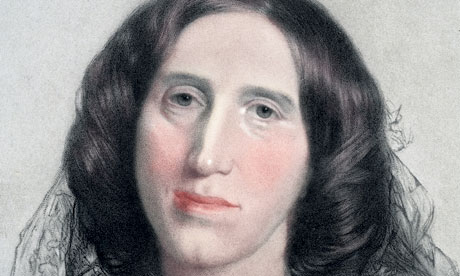
While visiting beautiful Doe Bay Resort on Orcas Island a month ago, I took a George Eliot biography from the leave-a-book, take-a-book shelf.  Now two days into an immersion and reconnection with one of my favorite novelists--especially from my formative years--I have enjoyed the portions I've devoured thus far regarding Eliot's youth.  Painfully gifted, exceedingly self-critical, and yet immensely motivated to win approval (and love), I think her story might ring a few bells of recognition for most of us adults that grew up as bookish, shy, and awkward children.  I know it certainly does for me!

I include most of of these old diary entries of mine simply because they make me laugh, but I was also surprised, on looking through some of my old journals and papers (being a prodigious diarist at the time) at how--alongside the predictably hilarious laments about acne and sixth grade crushes--I was clearly preoccupied with my school success and fledgling intellectual endeavors , holding myself to a rigid standard of excellence.  Of course this makes sense, as at the time I was a plain and oft-teased girl without the charms of bubblyness and prettiness that usually endear little girls to adults and peers.  I was too tall and had little to no interest in sports or other rowdy games.  Any extant picture from that time has been shoved into the deepest, darkest drawer of my old desk, so you'll just have to take my word for it: picture a stork with a pot belly, bowl cut, braces, and huge round glasses.  Banded together with the few friends I had (all of whom were also bookish, and remain close friends to this day), I found that the one thing I could do was schoolwork.  I loved to read (of course), and alongside this, I had an ambitious streak, and found that mastering schoolwork was the sole route available to me for distinguishing myself and winning praise.  Because, oh yes, like anyone, I loved praise.  I was not in it merely for the joy of learning.  It surprises me to find diary entries dating back to the 4th grade in which I recorded staying up until nearly midnight in order to study and complete assignments.  Fourth grade!  Apparently, I have been working on those procrastination and cramming skills for a very long time.

Reading itself, however, was an enduring joy.  I remember clearly the summer I spent obsessed with the Greek myths.  At my insistence, Dad took me to the local library, where I checked out a ponderous cloth-bound volume entitled A Dictionary to All Greek and Roman Mythologies.  I turned page after page of myths, laboriously cross-referencing the goddesses and heroes mentioned with the appendix in the back.  I encountered a lot of "Rapes" in this endeavor.  The Rape of Proserpine.  The Rape of Leta.  Huh, I thought at the time, but in all these pictures it just looks like someone's picking a woman up and carrying her around.  (I hadn't really figured out the illustrations or statuary depictions yet.)  I penned a little skit about being a messenger from the Underworld and wrote many small poems from the point of view of gods and goddesses.  In other words, I was in total adolescent nerd heaven.

I also remember how the early classics I read completely walloped me, especially the Brontes.  I loved Jane Eyre so much, I felt she might be a literary stand-in for myself.  I related especially to her feelings of mousiness, smallness, and inhibition.  At the same time, her radical bravery and demand for egalitarian love inspired me, and gave me hope that despite what I felt to be my unlovable exterior, my inner worth might someday be discovered.  I would surmise that any young person reading such a book at such an age might have similarly powerful feelings of identification with the young narrator.  Indeed, the novel is most enjoyable to read as a young person, in my opinion.  This set off a programme that continued through my early college years of "serious" fiction and poetry reading.  Interested only in what the Canon deemed the Classics, I scanned lists with titles such as "100 Best Books of the 20th Century" and "100 Greatest Novels," starred the books that looked interesting, and then read them one by one as my pleasure reading, or on summer holidays.  For a long time, I turned up my nose at contemporary, and most American literature, preferring instead to plod through a random selection of world literature greats.  Thank goodness, too!

Kathryn Hughes' biography of Eliot does bring to mind colors of my own girlhood and self-education in literature.  Eliot's self-education is a whole other marvel in erudition and intellectual rigor, so mine pales considerably in comparison, as does my intellect, of course.  A George Eliot is only born once or twice a century.  However, reacquainting myself with her august, looming presence over English literature, and over my own influences as a writer, I realize that in my childhood efforts, Eliot was just the sort of person I sought to copy.  More so than any writer, even writers whose works have moved me equally, and on a more adult footing, Eliot, the Brontes, and Austen were my original authorial heroines.  They were the first authors who affirmed for me that even someone obscure, plain (because I remained obsessed with this self-fashioning for many years), and even unpleasant could become "great" and be remembered for years to come.  And, I should mention, reading of the young Eliot, I am reminded of how arrogant and often priggish I could be as a girl--inflating my sense of self-importance in accordance with my belief that only great people could understand a soul such as my own.  That self is certainly the most painful to remember now that I have entered a well-adjusted adulthood and have long been reconciled to my own limits of intellect and influence.  As I said, there can only be one or two Eliots, and luckily, after about the age of 14, I cooled down a bit with my pumped up self-opinion and became a more pleasant, social, and (interestingly) less obsessive person.

Still, I have been interested in revisiting this long-buried childhood self because it was this same stubborn girl that chose writing as her metier at the age of six and insisted through the twenty-three intervening years that this was the thing--the thing I was destined to do.  I suppose, after all this time, that I am still invested in believing that girl.  I have to be.  This year I'm supposed to be doing the thing for real, for keeps.  I am starting to say it, more and more.  "I am a writer."  I have doubted myself many times, especially through my unfocused and pleasure-loving twenties, but here I am, alone, away from most of my friends and the urban center I've called home for six years.  I'm sitting here in my parents' house, sequestered with a book and journal and computer, and I am writing.  Painfully, and sometimes joyfully, I am doing the thing.  Ironic, isn't it, how our younger selves are so foolhardy and yet so full of fierce belief?  If I had given young me the (totally true) spiel about how hard it is to be published these days and how the state of publishing is perilous and how it's so hard to find time to write, she would have looked back at me, blinking behind those gigantic wireframes, and said So?  You just have to do it.  Her blind, arrogant, and foolish belief is, in many ways, exactly what I need.

Tuesday, October 26, 2010

Strutting, Sorting, and Sisterhood

So, there has been a lapse. Not a lapse in desire, but certainly a lapse in time, in motivation, in words. A lapse here at my poor neglected blog. Now, I am not going to make any grand promises about getting back to the entry-a-week pace I had going when I first began this humble outpost last year, but I do have quite the backlog of things that I have been involved in/thinking about, and so I think it's time to give them a due and catch up on a few projects.
First off, I participated in an event called Versus a few weeks ago. This was a project lovingly produced by The Heroes, a local arts collective in Seattle who have put on an array of cross-genre productions (plays, readings, etc.) in the past year or so. Versus was an interdisciplinary fashion show with the theme of "conflict resolution." To that end, each designer worked within a theme of resolving opposites (carrier pigeon vs. text messaging, paper vs. plastic, etc.). I was lucky enough to strut the runway for two designers: Angel Gehm (Joan Jett vs. Jellyfish) and Paige Sandilands (Dreams vs. Reality). Anyway, it was a pleasure to be part of this hub of artistic excitement and endeavour for the day. I got my hair teased out to ridiculous proportions by a genius stylist, enjoyed my leonine eye makeup, and had a ball socializing with all of my supportive friends who came out to support the show. For those intrigued, here are some photos of the event. Props to The Heroes and the way they've brought the artistic community together in their events thus far.
As for sorting, I've begun a new series of short pieces inspired by the idea of objects, especially objects belonging to strangers or people who have passed away. I'm really happy with them so far. On that note, I've found out more family history facts for those interested (on my mom's side of the family). I tracked a family of Talleys (spelled as Tally) in the 1840 and 1850 census rolls in Pontotoc, Mississippi (a place name so rich in alliteration, it's nigh-Faulknerian). A "Guilford Tally" is listed as the head of the household in both census entries, with a young son named "Major G." The idea of a young boy named "Major" delights me to no end. He seems to me like some sort of young Twain protagonist -- getting into scrapes and outsmarting the adults of the town. The members of the household are listed as being born in South Carolina or Georgia, so I think they might represent the first generation of Tallys in the town. My supposition is that young Major G. could be the father of my great-grandfather, D.G. (Demus Gordon), who was born in 1889, although admittedly, that would make young Major pretty old at the time of his birth, especially for that time period. Unfortunately, I haven't been able to access later censuses online to verify this (although a "D.G. Talley" of Pontotoc, MS is listed as buying a hog in 1906 -- certainly my relative. The internet never ceases to amaze). I could be wrong on all of this, but nevertheless, I'm having a grand old time being a sleuth on this trail of of yellowed papers.
On the other side of the family (Underwoods), I did a little searching about my great-great-grandfather, W.H. Underwood. From some of the correspondence and photos I now have in my possession, I know that he was a Methodist preacher, and that he and his wife worked as the heads of a Methodist home for the elderly in Beatrice, Nebraska. These are their photos (last seen gracing my grandaddy's mantle in Dayton, Ohio.
I had a hunch that information on this preacher might be more possible to dig up online than information on the Talleys, who were farmers. Bingo! I discovered the following fairly quickly:

William H. Underwood was born in Hamilton, Illinois, June 30, 1860, and is a son of Rev. William and Eliza (Hewitt) Underwood, who were well known early settlers of Illinois. He received his early education in the public schools of Illinois, and in 1877 and 1878 attended the Wesleyan University at Bloomington, Illinois, for two years. During 1879 and 1880 he taught school in his native state, and then started railroading following the work for about one year. He returned to school at Bloomington and after at year spent in study began teaching and continued about two years.
He then took up three hundred acres of land in South Dakota and farmed there for three years, at the same time substituting for various pastors, and organized and helped to build up Sunday schools in that locality. In 1887 he took his first appointment at Castalia, South Dakota, having charge over eight preaching places in the county, and remained one year, then was transferred to Alpena, South Dakota.
Mr.
Underwood was married at Edgerton, South Dakota, on January 15, 1888, to Hannah Marie Johnson, of Yankton, South Dakota, and after two years spent in that vicinity, the young couple located in Lincoln, Nebraska, where Mr. Underwood entered the service of the H. and M. railway company and followed that work for two years. In the fall of 1891 he took up his ministerial duties at Springfield, Nebraska, making that his home for five years, then was transferred to Papillion, Nebraska, remaining one year, then located at Arlington and filled the pulpit there for one year.
In May, 1898, at the begining of the Spanish-American war, he was the prime mover in organizing Company E, of the Third Nebraska Volunteer Regiment of Infantry, and was commissioned first lieutenant, later being made chaplain of the regiment, and went to Cuba with the company. He was mustered out of service in May, 1899. The third Nebraska, which was commanded by William Jennings Bryan, was first encamped at Panama Park, Florida, from which place it was sent to Savannah, Georgia, and then put aboard the transport Michigan, December 31, 1898, and sent to Havana, Cuba, where they remained three and one half months, then returned to Savannah, afterwards being sent to Augusta, Georgia, and there mustered out May 11, 1899.
Since 1898, Mr.
Underwood has devoted his entire attention to his pastoral duties, having various Nebraska charges. In 1905 he was appointed pastor of the First Methodist Episcopal church in St. Paul, Nebraska, and has greatly increased the membership during that time. He is a man of wide acquaintance, and is loved and looked up to by all.
Mr.
Underwood's father was a pioneer in the ministry, and he, also has two brothers in the service, all being men of superior mental attainments, broad-minded and charitable, and all have done the utmost in their different localities to better existing conditions and aid their fellowmen.
Five children have been born to Mr. and Mrs.
Underwood, namely: Clinton B., who was a teacher in the St. Paul schools, and is now in the junior year at the Nebraska State University; Frances, who attended college at Wesleyan University, and is now a teacher in the Central City schools; Henrietta, Lawrence and Thelma, the three latter at home.
I know from the handwritten family tree I have tracing the Underwood line that W.H.'s wife, Hannah Marie Johnson, was an emigrant of Norway. A quick Google map search located the tiny hamlet of Yankton, South Dakota to a mere two hours' drive from Lakefield, Minnesota, and the home of that other family of Norwegians from which I take my heritage -- my Dad's family, the Rues. I love the idea of all of these Norwegian relatives on two sides of the family, living close by on the open prairies and farmland of the 19th century Midwest. I guess it also reveals to me how in the end, everything reconnects: genes by way of Ohio, Mississippi, Houston, Nebraska, and South Dakota. That's my latest installment (for now) on my ongoing family digging. I'd like to do more, but life and decision-making have been keeping me pretty busy of late. Nevertheless, I'm really excited by what this project has helped me to discover, evoke, and write, so new installments will definitely be forthcoming.
My last note regards the frenzy stirred up a couple of months ago by a debate regarding the acclaim levied on male vs. female writers, cleverly dubbed Franzenfreude by the Twittersphere as the debate began with the rapturous reception of Freedom, Jonathan Franzen's latest hefty book to hit the shelves. A cure for Franzenfreude? Allow me to suggest this book. You're welcome.
(photo: mysterious portraits from my Grandaddy's house, so far unidentified (at least, my mom doesn't know). Who are they?!)

Wednesday, April 28, 2010

Story Up at City Arts(!) and Other Musings

First things first, a short story of mine, Mitigation Report 1, is now up on the City Arts magazine website. It has also been published as an excerpt in the print version of the magazine. For those unfamiliar with City Arts, it is a monthly arts magazine devoted to covering Seattle, Tacoma, and the Eastside. It's free for the taking, and widely distributed around the Seattle metropolitan area. I am pretty excited to be published in its pages. As I like to say, it has all the quality (free!) arts coverage of a publication like The Stranger, but without the snark. Last month, their cover story focused on letterpressing and the mad, brilliant folks who still painstakingly set type on vintage machines in order to craft something more personal in our digital age. Good stuff. This month's cover story focuses on the Seattle International Film Festival. Give it a gander, and click on the link above to check out my story.

Speaking of my story, a link on the right side of this page can take you to an audio file of me reading Mitigation Report 1 last year at Castalia, a UW-sponsored reading series at local literary center, Richard Hugo House. As I explain in my preamble to the story, I was inspired to write this particular short short by the work I have been doing this past year as a legal assistant for a criminal defense attorney. Legal work requires the (oftentimes tedious) organization of reams and reams of documents. This often includes mitigation documents.

I was unfamiliar with the idea of "mitigation" in the legal sense until taking my current position, but the presentation of mitigation evidence in a criminal trial often forms a crucial aspect of what is called the "sentencing phase." At this point, the jury has already returned a guilty verdict, but the presentation of evidence is not over for the prosecutor, or the defense attorney. Now, evidence is presented that mitigates against the seriousness of the crime and attempts to elicit some mercy from the jury or judge before a sentence is returned. In a capital case, this element of the trial proves especially important, as garnering sympathy or understanding from the jury can quite literally be a matter of life or death.

In these high-profile capital trials, a mitigation expert will often be retained by defense counsel. This expert completes the work of obtaining voluminous documents from all stages of a client's past -- from childhood to adulthood. These social history records comprise everything from birth certificates, to records of child abuse and institutionalization, to adult correctional facility records. The mitigation expert then crafts a kind of story from these records and attempts to ask, and answer, the question: Who is this person who sits before you for judgment? How might he/she have arrived here, in this courtroom?

Although it would be inappropriate of me to comment on the mitigation records I have reviewed for specific clients, I will say that as a writer, I find them extremely compelling. In these photocopies are the stories of children running away from home, being abused, lashing out, begging for help. In short, they are the story of a life. Reading them puts me, and I would imagine a jury member, in the interesting position of seeing two people: a person who has been found guilty of a heinous crime, and that person as a child; an innocent who will be formed by the experience he or she encounters -- formed, and perhaps hardened and twisted beyond repair. It was with these two people in mind that I composed this story, interspersing the "official" language of state and legal agencies to add an institutional flavor to the collage piece.

This is what I find amazing about legal work: at its base, it is the messy stuff of life itself. Children growing up; parents making mistakes; the state often tragically late in coming to the aid of those in need. Since taking this job, I have thought a lot more about what it means to be merciful, what it means to "condemn" a person, and the conflict inherent in despising someone's acts, while understanding (partially at least) how they came to the juncture where the act was committed. In short, I have had to negotiate my relationship to that child, and to that child as an adult.

Oh, and speaking of archives and records, I have now begun sorting through a collection of beautiful old letters and photographs and postcards, most pre-dating 1930, that belong to my mother's family. I hope to blog about this in the future, and perhaps write some flash fiction about the experience of cataloging these family records...

(http://www.archives.gov.on.ca/english/about/preservation/pics/documents_2_520.jpg)