Showing posts with label good covers. Show all posts

Saturday, July 13, 2013

Just Shelved


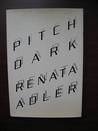
Pitch DarkPitch Dark by Renata Adler
My rating: 4 of 5 stars

Bow down to the collage novel! Long live the hybrid text!


My Love Is A Dead Arctic ExplorerMy Love Is A Dead Arctic Explorer by Paige Ackerson-Kiely
My rating: 3 of 5 stars

This collection intrigued me and I stuck with it, though in the end, it didn't stick to my ribs or blaze through with an unforgettable line. I think the more colloquial, story-telling prose poems were the most accessible of the collection, though they, too, seemed to deliberately elude a complete grasp.


My rating: 4 of 5 stars
Alternately helpful and discouraging meditations on writing; worth it for the portions set in the Pacific Northwest alone.
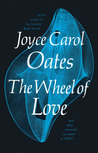


The Wheel of LoveThe Wheel of Love by Joyce Carol Oates
My rating: 4 of 5 stars

I admit that by the end of this large collection of stories, I was praying to myself, "please don't go crazy, please don't go crazy." Madness, obsessive thoughts, anxiety, drug use, familial death, and physical disfigurements all feature heavily in these dark pieces, all originally published by 1970. These are stories of their time, too: racial integration, counterculture in conflict with suburbia, trapped housewives, the decline of Detroit.

"Where Are You Going, Where Have You Been?" is by far the most famous story here, and it's really not overrated, in my opinion. I would group it among the most perfect, unsettling short stories written in the past 100 years. It's a distinctly American classic. Another classic would be "How I Contemplated the World from the Detroit House of Corrections and Began My Life Over Again." Love and sexuality loom as disruptive forces for the men and women of these stories, especially the women. Characters are paralyzed in adulterous hell or transfixed in moments of despair over a life that stretches predictably ahead. On the other side, those who choose the bohemian way fare no better. They are flying dangerously free, unmoored and despised.

Oates' stories depict a culture at a crossroads and railing within it. The smoothness of artistic production can be ripped apart by the intrusion of the other. The burden of performing personality is a sentence of permanent psychic anxiety.

From a stylistic standpoint, these are also worthwhile fictional experiments. Rather than conventional plots, many of the stories in this collection rely on snapshots in time of the same character. Sometimes, they are told backward. Sometimes, groupings of experience and advancing psychological states are captured beneath obtuse or leading subject headings. I enjoyed this organizational ingenuity and the way Oates' distinctive prose lingers on mental states and character impressions. Nothing is described dispassionately; in contrast, everything is experienced as intense, jarring, and grating on the senses. This technique does a good job in creating unease for the reader and illuminating the interiors of Oates almost uniformly troubled characters.

This was my first time reading Oates at length, but I definitely would like to read more of her fiction. I feel after completing The Wheel of Love that I've experienced that time period more viscerally than I have before.


View all my reviews

Thursday, November 29, 2012

Just Shelved


The Hare with Amber Eyes: A Family's Century of Art and LossThe Hare with Amber Eyes: A Family's Century of Art and Loss by Edmund de Waal
My rating: 4 of 5 stars

You may want to become familiar with the words "vitrine" and "bibelot" before beginning this marvelous journey into the past and into objects.  They come up a lot.  Indeed, de Waal does not shy away from rarefied diction throughout, but his artistic choices seem altogether suited to his subjects, which include Paris, Vienna, Impressionism, Proust, dynastic families, what it means to be a collector, post-War Tokyo, and what, exactly, happened to his own powerful Jewish family's legacy in the wake of World War II.  Oh, yes, and this is also a book about netsuke--marvelous, rare, and yet simultaneously quotidian Japanese objects.  Their journey into de Waal's hands is remarkable.  His reflections on what it means for them to have been first collected, then displayed, and finally, passed down, are equally remarkable.  Never completely comfortable with the easy angle, de Waal's own ambivalence often soaks onto the page, and while some reviewers have found this frustrating, I found it absolutely authentic.  Trusting the reader to draw his/her own conclusions, de Waal's nevertheless takes us on a entirely unique journey.  I highly recommend this book.

View all my reviews

TracksTracks by Louise Erdrich
My rating: 4 of 5 stars

Another stunning, indelible book from Erdrich.  What can I say, this book saw me through a dark hour.


View all my reviews


ArcadiaArcadia by Lauren Groff
My rating: 2 of 5 stars

Two stars seems a bit harsh for a book that is quite well-written and populated with rounded, unique characters.  However, of the three Groff titles I have read, this novel was the least strong, and though I finished it quickly, I really resisted her choice to tell the entire tale in the present tense.  It made the whole novel, especially the beginning, seem hazy and overly precious.  I'm still waiting for the gorgeous, darker novel that I feel is up Groff's sleeve.  In the meantime, I hope to read more of her sparkling short fiction.

View all my reviews

Saturday, October 6, 2012

Pause

A few minutes ago, I wrote the final paragraph of one the character's stories in my novel.  I've been with her voice since Day One, and although it sounds hokey to say it, she is the one that I've written the novel for--if it wasn't for her stubborn, insistent voice, I wouldn't be where I am now.  I'm a bit superstitious about spilling too many of the beans about the book or its characters, but I can share that I've long planned to have two interwoven sections: one with her, and one following another, related character.  It's all planned out in my head (except, of course, for all the lovely digressions that end up being the best writing), and yet...as I double-spaced and typed in the subject header of "Part Two," I found myself at a loss.  I'm entering a new phase in the drafting process, and while I am excited because it means that the book is moving forward, towards where I want it to go, I feel what I think is probably a normal fear that I won't be able to sustain this switch in point of view and tone.  I worry that I'll miss the heady composition process from the point of view of my first character, whose very tics of speech and taste are so clear to me, it's almost as if I've ridden in a car with her for days, listening to her unbroken monologue.  Suddenly: silence, with all its pregnant expectation and blankness.  I realized, while facing down that daunting "Part Two," that I needed to come here and write about being afraid to press on...so that I can actually press on.  These are uncharted writing waters for me.  What if I write past the point of comfort, past the point of a neat ending?  What if I just keep going?  Well, I suppose it's time to find out.  Gulp.
***
Another note: I haven't unpacked most of my books, but was restlessly rooting through my boxes of unread tomes, trying to unearth something compelling for my next read.  I found this little James volume (pictured above), which I believe I purchased as one of a dozen during a Seattle Public Library sale.  I felt it came back to my notice for a reason, so voila, I am now reading it.  And, hello, double negatives and strings of dependent clauses.  An imitation late Jamesian sentence: "It was not that she had not noted the effect she had produced on him, even while being unsure of the effect being altogether something that she could have produced, had she been aware of being able to produce effects, but then she was of a type wholly used to the assumption that when an effect had been made, surely at its heart, an intention had lain behind it."  Of course, psychologically, not so inane at all, but the style is incredibly dense.  I feel I must stick with it, however, due to the charming Hug Coupon bookmark that I found inside.  The paperback edition itself is from the 50's, and a prior owner had gone through and hand-taped the spindly pages back to the spine.  At a guess, I'd say the "coupon" dates from the same era.  On the back is written: Clayton, 11:15 Wed. at Carol James - audition for "Noah"on-camera industrial.  This one's for you, Clayton.  I hope you got that part.

Friday, February 10, 2012

Just Shelved

So Long, See You TomorrowSo Long, See You Tomorrow by William Maxwell

My rating: 4 of 5 stars

A master class in saying everything in just a few words.


The Tiger's WifeThe Tiger's Wife by Téa Obreht

My rating: 3 of 5 stars

If you've read this book, tell me if you wouldn't rather it be called The Deathless Man. I resisted the neat tie-up at the end. I like my packages messier these days, with lots of loose ribbon.


Louise in LoveLouise in Love by Mary Jo Bang

My rating: 4 of 5 stars

Reading: participation in the construction of an artifice; the construction of a dream.


View all my reviews

Saturday, November 19, 2011

Just Shelved

My rating: 4 of 5 stars

This is a book about the self-fashioning of an artist. A young woman surrounds herself with totems; she bends towards and away from the artistic visions of others; she finds muses and is herself a muse.

This is certainly a love story. This is about being in the right place at the right time (but surely chance meetings with Janis Joplin and Sam Shepard and William Burroughs say just as much about what kind of magnetism Smith herself must possess).

I wept through the end of Just Kids; I found it very moving as a testament to a friendship and a person and another artist. When do we become an artist? Is it when we declare it? Is it when we've been recognized for our art? Is it when we dedicate ourselves to it? Is it simply when we believe it of ourselves?

I also thought about poverty as a purifier for Smith and the circle of creatives around her in NYC during this remarkable time. I've never been comfortable with giving up material comfort for art. Smith and Mapplethorpe begin as young ascetics, and yet they're getting things done; they're making the connections they need to succeed. I believe it's a function of my background: once comfortably middle to upper middle class, forever hoping to keep that standard. But it's not hard to feel a sense of envy or nostalgia for Smith's romantic vision of art-as-sustenance, for this brave girl showing up in New York with nothing but a few possessions and a belief in where she needed to be, and making a go of it. She demonstrates blistering courage. Of course I don't have regrets, but it is provocative to consider the paths of others, especially someone like Patti Smith who began not even sure what medium would be hers, but was so clearly meant to be a VOICE, and now, successful memoirist.

Monday, October 24, 2011

Just Shelved

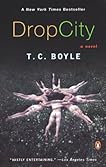
Drop CityDrop City by T.C. Boyle

My rating: 3 of 5 stars

Sometimes when you are trying to express the worldview and interior, like, tone of your characters, it becomes necessary to write in the passive voice, and then you are writing all of the descriptions of action in the passive voice, and you are relying on that technique pretty consistently. And could it be repetitive? Is asking a lot of questions in a row something a hippie might do? Does that seem like a realistic trope? Yeah, man, because they've got a shaggy dog style of talking and thinking and appending to their thoughts with more and more filler and more and more interjections.

It is possible you are annoying your readers with these stylistic tics, despite the fact that there are vivid characters, strong dialogue, and some appreciated ribald humor in your book.

Whatever, man. Let's get high.

(Drop City recommended for entertaining and briskly plotted look at a band of flower children trying to hack out their Utopian farm ideal in Alaska. Caveat: the annoying prose style cited above.)

View all my reviews

Sunday, October 9, 2011

Just Shelved

My rating: 4 of 5 stars

Great collection entirely comprised of up-and-coming (and firmly established) female writers of fantastical, fabulist, and, well...weird fiction. I loved the presentation and careful curation of this book--clearly exciting things are happening at Tin House. Some of the bigger names (Lydia Davis; Miranda July) were represented by fairly slight (dare I say lazy?) pieces, but there were plenty of other gems and new writers to discover. A few stories tended towards the fey or overly cute--always a risk of this genre--but there was enough unsettling, and indeed, unfeminine, weirdness to go around. I also think the tone of fantastic fiction lends itself well to describe coming-of-age journeys: a freakish time, indeed.

Particular favorites:

Aimee Bender's "Americca"
Judy Budnitz's "Abroad"
Julia Elliott's "The Wilds"
Samantha Hunt's "Beast"
Kelly Link's "Light"
Lydia Millet's "Snow White, Rose Red"
Alissa Nutting's "Hot, Fast, and Sad"
Stacey Richter's "The Doll Awakens"
Karen Russell's "The Seagull Army Descends on Strong Beach" (my favorite)
Gina Zucker's "Big People"

Tuesday, January 4, 2011

Just Shelved

My rating: 4 of 5 stars

Solid short story collection highly worth checking out.


My rating: 4 of 5 stars

Postmodern puzzlebox of a book, linking characters' lives like a spiderweb - tenuous, touch and go. I was alternately moved and frustrated. An interesting companion piece to Cloud Atlas, which attempts similar disruptions in form. Surprisingly, the chapter that engendered the most skepticism -- a chapter told entirely in Powerpoint -- ended up being one of the most moving. I keep taking back my fourth star and then returning it. Egan, we aren't through.


Sunday, December 12, 2010

Just Shelved

My rating: 4 of 5 stars

David Mitchell is the literary equivalent of that person who can do scarily accurate impersonations of everyone. He throws himself into a pastiche of literary styles and time periods with verve and brilliance. Cloud Atlas is like five extremely provocative and entertaining novellas for the price of one. The question for me, though, is this: Are the artificial plot breakages and post-modern conveyances necessary? Is Mitchell afraid that it's not clever enough simply to be a supremely gifted storyteller? To my mind, it's the opposite. Storytelling is the true magic.


Monday, September 20, 2010

Just Shelved

My rating: 4 of 5 stars

I resisted this book at first. I wondered what Caro Bell (the character with the most page time) had to offer besides being an incongruous challenge for men to fall in love with; falling in love with her seemed to say something about their characters, but did little to illuminate hers. I also bristled at some of the prose. As with many elliptical and lyrical prose writers, Hazzard's overreaching imagery coexisted--sometimes awkwardly-- with searingly beautiful turns of phrase.

I was miffed. I also kept reading. And opened the book on my lunch hour. On the bus. Late at night. Early on a Sunday morning.

I was surprised in the best way, the way I remember being surprised by Anna Karenina long ago, in that characters who had originally seemed outside of the central drama, writ large, were illuminated with the same inquisitive brush as the ostensible central figure of mystery. Love was walked into like sudden, perilous games of cards. All or nothing. The highest of stakes. In the end, I had the most sympathy for those that had originally seemed the least interesting. I saw myself in them. The perilous love endured, this time the way a bus lumbers past every hour or so, and everyone notes it and thinks, "Yup. Still running."

Meanwhile, the England of the setting is modernizing. Women are working in offices. Caro Bell never ages and wears delightful scarves at all times.

And, then--

--one of the best and most finely-executed plot twists I have ever encountered in a work of fiction. To say more would give something away. But wow. Characters are unmasked; all is not as it has seemed.

Four stars: earned with grit and gristle.

Monday, August 23, 2010

Just Shelved

TinkersTinkers by Paul Harding

My rating: 5 of 5 stars

I think I want to read Tinkers again. It's a slight book -- I finished it in a day and change. It's also completely beautiful, like some extended, hypnotic free verse poem that plays lovingly over and over the possibilities of language and description the way light plays over the surface of water.

Marilynne Robinson provides the blurb for the cover, and there are certain echoes of her lyrical masterpiece, Gilead, in Tinkers' quiet meditation on observation, natural beauty, and a father/son relationship. However, in structure and approach, I would compare the book more aptly to a novel like The Lover -- a self-contained and interior lyric work. Despite all the risk inherent in this kind of fiction, there are almost no missteps, save for a couple of overly big words that clank unnecessarily in their sentences, and one abstract lyric passage in the last few pages that interrupts the power of the closing scene. Other scenes, however--like that of a home being moved down a snowy track in the heart of winter--are the kind of images that stay with you, long after you've closed the book. In fact, in an odd way, I feel like Tinkers is the kind of book I've always wanted to read about snow and silence and trees and seasons. It creates its own readers.

On a final note, hats off to whomever designed Harding's cover. It drew me in from across the room, and after reading the first page, I knew I would have to buy the book. The story of Tinkers' voyage to print is heartening for any "emerging" writer. I look forward to Harding's work to come.

View all my reviews